FIXEDb317rel/events3 min read
Four Operational Lessons From Pocket Gamer Connects Nordics 2026
PGC Nordics 2026 in Helsinki surfaced clear guidance on AI tooling, running web stores as products, and why discovery now outweighs concept quality.
Patch notes
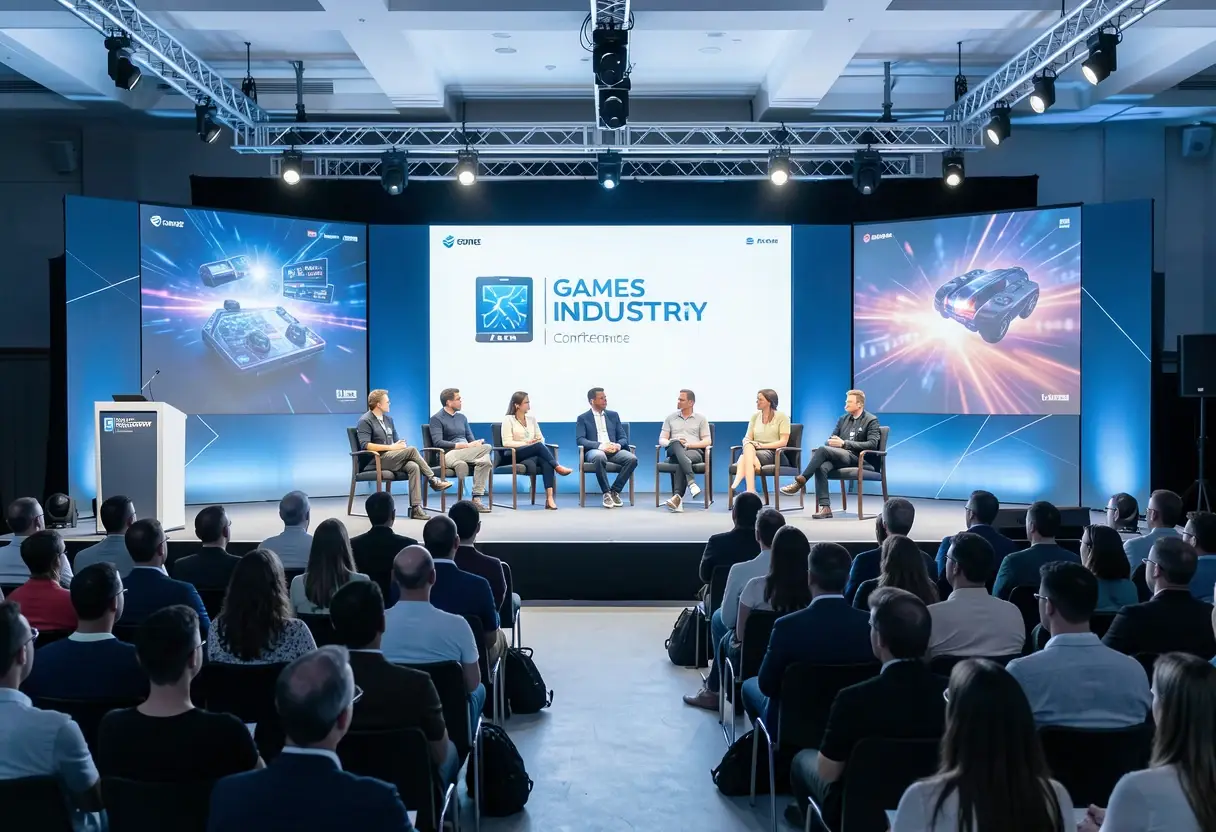
Pocket Gamer Connects Nordics 2026 took place in Helsinki
Ubisoft announced the closure of RedLynx; BioWare's closure was reported during the event
Embark Studios' ARC Raiders was cited as a major Nordic hit
Daria Berdnikova: 'existence doesn't equal performance' on D2C web stores
Pocket Gamer Connects Nordics 2026 closed in Helsinki with a consistent operational message: success depends not only on making a great game, but on making deliberate choices about how it is built, distributed and sustained.
The event took place against a market backdrop of uncertainty, layoffs and studio closures — including the news, arriving during the conference, that BioWare has closed after decades of operation. Yet the Nordic region also produced one of the period's clearest hits, Embark Studios' ARC Raiders. Here are the four takeaways that carried across the Helsinki sessions.
Where does AI fit in production?
Luke Dicken offered a pragmatic framing: AI is worth exploring when it creates new possibilities, not simply because it attracts attention. He warned the industry risks "chasing our tails" in debates over whether AI is good or bad, rather than identifying where it genuinely helps.
For smaller studios, AI is already lowering the cost of experimentation — enabling tests that previously required significant budgets. Speakers repeatedly stressed that the value lies in selecting the right tools and use cases early in development, where AI can widen the range of ideas a team explores.
The boundaries matter as much as the tools. Teams should set clear limits, and real people must remain responsible for shaping ideas and owning the final outcome. In plain words: neither fear AI nor adopt it wholesale; deploy it where it measurably expands what the team can do.
Why is a web store not enough?
Direct-to-consumer (D2C, selling directly to players rather than through app stores) sessions converged on one point: launching a web store is only the beginning. Daria Berdnikova put it bluntly: "existence doesn't equal performance."
A store must be run like a product — supported day to day, improved continually, and designed to give players a reason to return. Personalised offers and loyalty schemes help, but only when they fit the specific audience. Berdnikova noted that "getting that first dollar" can be the hardest transaction to win, and that even afterward studios must keep earning the player's return rather than assuming the initial purchase secures a lasting relationship.
Localisation extends beyond translation and currency conversion into market-specific payment behaviour. Berdnikova cited a publisher expanding into Japan that added PayPay to its checkout — an increasingly popular payment method there — and saw successful results for the store.
Olga Dokun added that D2C delivers more than higher margins: it gives studios a direct player relationship, but also transfers the operational burden of customer support and refund handling. A store is not a "set it up and leave it" solution; it is an ongoing product and service.
Does the best game still win?
A panel titled "Does the best game still win?" crystallised a recurring theme: a strong concept is no longer the bottleneck. Distribution and retention are. Studios should think early about who the game is for, how to reach those players, and what will bring them back — sometimes before perfecting the game itself.
The discipline applies to live games too. Urska Leskovar of Outfit7 (the studio behind the Talking Tom franchise) advised that when engagement drops, teams should not reactively add more content. First diagnose the cause — onboarding friction, a player-experience problem or something else. For every roadmap idea, she said, ask: "What does this add, and why should the players care?"
How is the Nordic industry holding up?
The Nordics have not escaped industry-wide pressure. Star Stable Entertainment, Ubisoft Stockholm and, most recently, Ubisoft's announcement that it is closing RedLynx (the Finnish studio behind the Trials series) have all felt the impact, alongside the wider wave of layoffs and closures.
ARC Raiders stands as the regional counterpoint. At the event, executive producer Aleksander Grondal said he was happy working with a team that is smaller but more connected. He was not arguing against growth, but that growth takes different forms and that a strong, connected team is worth protecting as a studio.
The wider question for Nordic developers is whether that connected-team model — validated by ARC Raiders' success — survives the current cycle of consolidation and closures.
via PocketGamer.biz (Source)
More from James Calloway
Show full bio
Senior reporter covering money, funding and market shifts around video game industry at Game Dev Wire.
174 articles